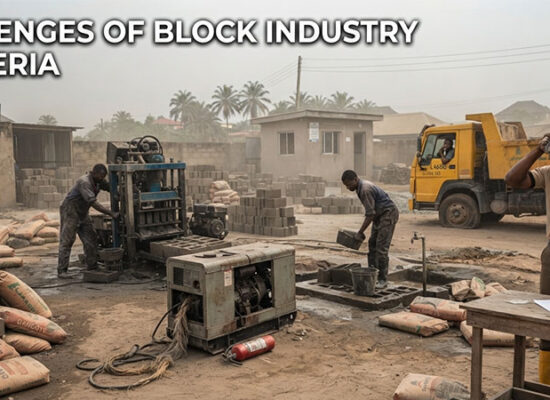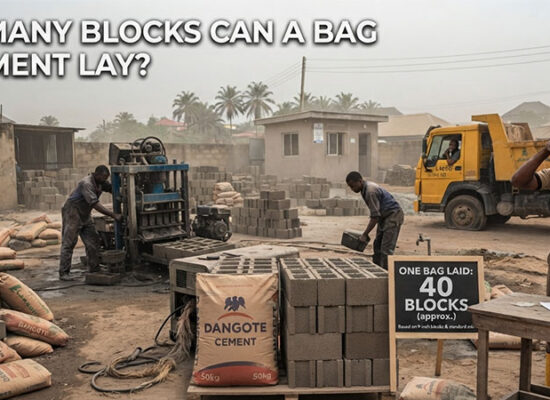
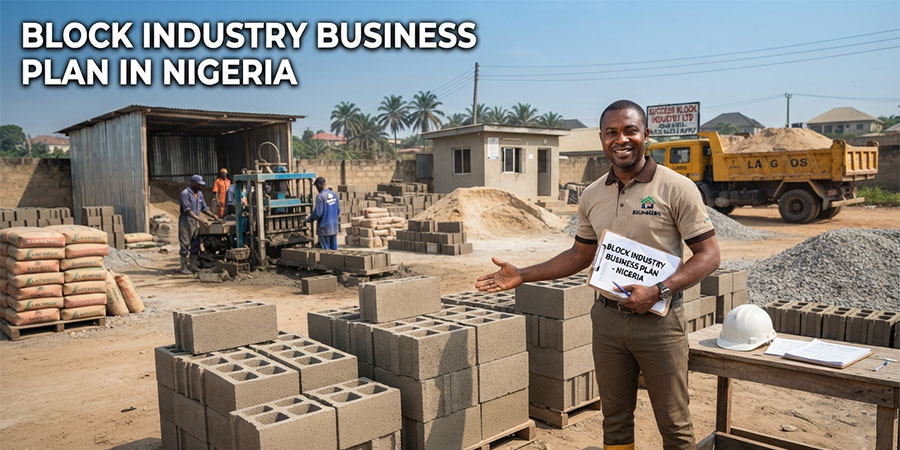
Starting a block-making business can be a profitable opportunity in Nigeria because blocks are essential materials used in residential, commercial, and infrastructure construction. However, buying a machine, securing land, and producing blocks is not enough to guarantee success.
A well-prepared block industry business plan helps you understand your target market, estimate startup costs, control production expenses, set realistic prices, manage cash flow, and build a sustainable business.
This is particularly important because the cost of cement, sand, transportation, labour, electricity, water, and machinery can vary significantly by location and over time. Instead of guessing how much money you need, a business plan gives you a structured way to calculate your requirements before investing.
In this guide, we explain how to prepare a practical block industry business plan in Nigeria, what equipment you need, how to estimate expenses, how to market your products, and how to improve profitability.
What Is a Block Industry Business Plan?
A block industry business plan is a written document that explains how a block-making business will be established, operated, marketed, and managed financially.
It normally covers:
- Business objectives
- Market research
- Target customers
- Products and block sizes
- Production process
- Equipment requirements
- Raw materials
- Labour requirements
- Startup costs
- Operating expenses
- Pricing strategy
- Sales projections
- Marketing strategy
- Potential risks
- Profitability analysis
- Business growth plans
The purpose is not simply to produce a document for investors or lenders. A good plan should help the owner make better day-to-day business decisions.
Why You Need a Block Industry Business Plan
Many small businesses fail because the owners begin operations without understanding their actual costs.
For example, an entrepreneur may calculate the cost of cement and sand but forget expenses such as water, diesel, electricity, machine maintenance, labour, loading, transportation, land preparation, security, rejected blocks, and credit sales.
A detailed plan helps prevent these mistakes.
1. It Shows How Much Capital You Need
The amount required to start a block industry depends on several factors, including location, land arrangement, production capacity, machinery, electricity availability, transportation, and whether the business will operate manually, semi-automatically, or with more advanced equipment.
Your business plan should separate one-time startup expenses from recurring operating expenses.
2. It Helps You Understand Your Market
Before establishing a block factory, identify who will buy your products.
Potential customers include:
- Individual home builders
- Building contractors
- Property developers
- Real estate companies
- Construction companies
- Estate developers
- Government contractors
- Churches and religious organizations
- Schools and institutions
- Hardware and building-material dealers
The best location is not necessarily the cheapest location. A slightly more expensive site may be more profitable if it provides convenient access to major construction areas and reduces transportation costs.
3. It Helps You Control Costs
Profit in block production depends heavily on cost control.
If you sell blocks without accurately knowing your cost per block, you may generate impressive sales while making little or no profit.
Your plan should therefore calculate the cost of producing a batch and then determine the approximate cost per block.
Block Industry Business Plan: Business Description
The first section of your plan should explain what the business does and what makes it different.
A sample business description could state that the company will manufacture and sell quality sandcrete blocks to homeowners, contractors, developers, and building-material distributors.
The business can begin with popular block sizes and later expand into additional products based on customer demand.
Possible products include:
- 4-inch blocks
- 5-inch blocks
- 6-inch blocks
- 9-inch blocks
- Solid blocks
- Hollow blocks
- Interlocking blocks
- Other concrete products, depending on equipment and market demand
Product selection should be based on local construction practices and customer requirements rather than producing every possible block size from the beginning.
Market Analysis for a Block-Making Business
Market research is one of the most important parts of your block industry business plan.
The objective is to determine whether there is enough demand in your chosen area and whether you can compete profitably.
Study Your Local Construction Market
Visit construction sites and building-material markets in your target area.
Find out:
- Which block sizes sell the most?
- What prices are competitors charging?
- How far are customers willing to travel?
- Do contractors buy directly from manufacturers?
- How much do competitors charge for delivery?
- Are customers complaining about poor block quality?
- Are there periods when demand increases?
- How many competing block industries operate nearby?
This information can help you identify opportunities.
For instance, if existing producers are known for inconsistent quality or unreliable delivery, a new company could compete by offering stronger blocks, dependable supply, transparent pricing, and faster delivery.
Location Requirements for a Block Industry
Location can significantly influence profitability.
A suitable site should ideally have:
- Good road access
- Adequate space for production
- Space for curing and storing blocks
- Reliable water supply
- Access to electricity or alternative power
- Easy access to cement and sand suppliers
- Proximity to construction activity
- Adequate drainage
- Space for vehicles to load and unload products
Transportation is especially important because blocks are bulky and relatively heavy. A poorly located factory can lose customers because delivery costs become too high.
Before leasing or purchasing land, confirm that the proposed location is suitable for the intended commercial activity and complies with applicable local requirements.
Equipment Needed for a Block Industry
The equipment you need depends on your production scale.
Basic Equipment
A small operation may require:
- Block-making machine
- Moulds
- Shovels
- Wheelbarrows
- Head pans
- Water containers or tanks
- Measuring equipment
- Pallets or suitable stacking surfaces
- Curing equipment or water supply
- Generator or alternative power source where necessary
Larger-Scale Equipment
A larger block factory may invest in:
- Hydraulic block-making machines
- Automatic or semi-automatic machines
- Concrete mixers
- Conveyor systems
- Industrial water systems
- Forklifts
- Pallet systems
- Backup generators
- Multiple mould configurations
- Delivery trucks
Do not automatically purchase the most expensive machine available. Choose equipment based on your expected sales volume, available capital, labour capacity, maintenance requirements, and local technical support.
A machine that produces thousands of blocks per day is not useful if your market can only absorb a fraction of that output.
Raw Materials Required
The primary materials for conventional sandcrete block production include:
- Cement
- Suitable sand
- Water
The quality of these materials has a direct effect on the quality of the finished blocks.
Poor-quality or contaminated sand, incorrect proportions, insufficient compaction, inadequate curing, or poor production practices can result in weak blocks.
The Standards Organisation of Nigeria maintains standards for products and production processes, and its standards framework is intended to help ensure products are fit for purpose and consistent.
SON’s library also records NIS 978 as the current standard replacing older sandcrete-block standards such as NIS 87, so operators should verify the latest applicable requirements directly with SON rather than relying on outdated online information.
Standards Organisation of Nigeria
Block Production Process
A professional block industry should have a consistent production procedure.
The general process includes:
Step 1: Prepare the Materials
Ensure cement, sand, and water are available in the appropriate quantities.
Step 2: Measure Materials
Use consistent measurements rather than estimating quantities by eye.
Consistency is essential because changing the mix from batch to batch can affect the strength and quality of the blocks.
Step 3: Mix
Combine the materials thoroughly until the mixture is adequately blended.
Step 4: Mould and Compact
The mixture is placed into the block machine or mould and compacted appropriately.
Machine vibration and compaction can influence block density and strength. Research on Nigerian sandcrete blocks has examined how production methods affect compressive strength, reinforcing the importance of controlled production practices.
Step 5: Remove and Arrange
Fresh blocks should be carefully handled and placed on suitable surfaces.
Step 6: Cure
Curing is an essential part of producing durable blocks. The blocks should receive appropriate moisture and curing time according to the production method and applicable technical requirements.
Step 7: Store and Deliver
Finished blocks should be stored properly and protected from unnecessary damage before delivery.
Financial Plan for a Block Industry
The financial section is the heart of your block industry business plan.
Instead of using one fixed figure as the cost of starting a block industry, create a location-specific budget.
Startup Cost Categories
Your initial budget may include:
| Expense | Purpose |
|---|
| Land or rent | Factory location |
| Site preparation | Clearing, levelling and drainage |
| Block machine | Main production equipment |
| Mixer | Material mixing |
| Generator | Backup power |
| Water system | Production and curing |
| Tools | Handling and production |
| Raw materials | Initial production |
| Labour | Workers and operators |
| Registration | Legal business setup |
| Transportation | Delivery and logistics |
| Security | Protection of equipment and materials |
| Working capital | Daily operating expenses |
Actual figures should be obtained from suppliers and local service providers because equipment and construction-material prices can change.
Working Capital
One of the biggest mistakes new entrepreneurs make is spending nearly all their money on equipment.
A block industry also needs working capital.
You need enough cash to purchase cement and sand, pay workers, cover transportation, maintain machinery, handle utility costs, and continue production while waiting for customers to pay.
For this reason, your financial plan should distinguish between fixed investment and working capital.
How to Calculate the Cost of Producing Blocks
A simple costing model can help you determine whether your business is profitable.
Suppose a production batch uses:
- Cement
- Sand
- Water
- Labour
- Electricity or diesel
- Equipment maintenance
- Loading
- Other production expenses
The total production cost can be calculated as:
Total Production Cost = Materials + Labour + Power + Maintenance + Other Production Costs
Then:
Cost Per Block = Total Production Cost ÷ Number of Saleable Blocks Produced
You should calculate this using your actual local prices.
Do not include only cement and sand when calculating your cost per block.
Also account for production losses, damaged blocks, machine maintenance, equipment depreciation, transportation, and other relevant expenses.
Pricing Strategy for a Block Industry
Your selling price should cover your total cost while leaving a reasonable profit margin.
However, simply charging more than competitors may not work.
A better pricing strategy considers:
- Production cost
- Competitor prices
- Block quality
- Delivery distance
- Order size
- Customer type
- Seasonal demand
- Payment terms
- Fuel and transportation costs
You may offer different prices for large orders while protecting your minimum acceptable margin.
For example, a contractor purchasing several thousand blocks may receive a negotiated price, but the discount should be based on your actual cost structure.
Sales and Marketing Strategy
A strong block industry business plan should explain how customers will find and buy from you.
1. Build Relationships With Contractors
Contractors can become repeat customers.
Visit construction sites, introduce your company, provide samples where appropriate, and maintain reliable delivery schedules.
2. Use WhatsApp Marketing
Create a business WhatsApp profile containing:
Business name
Location
Phone number
Block sizes
Prices
Delivery information
Photos of products
Customer reviews
3. Optimize Your Google Business Profile
A verified local business presence can help people searching for block suppliers in your area discover your business.
4. Use Social Media
Post:
- New production batches
- Customer deliveries
- Product information
- Factory activities
- Construction tips
- Customer testimonials
Avoid making unsupported claims about block strength or quality.
5. Offer Delivery
Many customers prefer suppliers who can deliver directly to the construction site.
If you operate your own truck, calculate delivery costs carefully. If you use third-party transporters, negotiate reliable rates.
Legal and Regulatory Considerations
Before starting operations, investigate the registration, taxation, environmental, land-use, local government, and other requirements applicable to your location.
The Corporate Affairs Commission (CAC) is Nigeria’s official corporate registry and handles registration of business names and companies.
CAC Business Name Registration
Depending on your business structure, you can investigate whether registering as a business name or company is more appropriate for your objectives.
You should also investigate applicable standards and quality requirements. SON states that Nigerian Standards provide rules, guidelines, and characteristics for products and production methods.
Do not assume that compliance requirements are identical in every state or local government area. Confirm requirements with the relevant authorities before establishing the factory.
Staffing Requirements
A small block industry may start with a relatively small team, while a larger operation will require more specialized employees.
Possible positions include:
- Manager
- Machine operator
- Production workers
- Material handlers
- Driver
- Sales representative
- Accountant or bookkeeper
- Security personnel
- Maintenance technician
Clearly define responsibilities.
Workers should also receive appropriate training on machine operation, material handling, housekeeping, and workplace safety.
Cement and cement-containing materials can create dust exposure, so appropriate workplace controls and personal protective equipment should be part of the operating plan.
Major Risks in the Block Industry
Every business has risks, and your plan should identify them before they affect operations.
Cement Price Increases
When cement prices rise, production costs can increase rapidly.
Solution: Maintain relationships with multiple suppliers, monitor prices, reduce waste, and review your selling prices when necessary.
Poor Block Quality
Weak or poorly manufactured blocks can damage your reputation.
Solution: Standardize measurements, control production, maintain equipment, and implement quality checks.
Equipment Breakdown
Machine downtime can stop production.
Solution: Maintain equipment regularly and establish relationships with reliable technicians.
Power Problems
Unreliable electricity can increase operating costs.
Solution: Develop a realistic power plan and compare the cost of available alternatives before purchasing equipment.
Bad Debt
Selling large quantities on credit can create cash-flow problems.
Solution: Establish clear credit policies and prioritize customers with reliable payment histories.
Low Demand
Opening too close to many competitors can make it difficult to attract customers.
Solution: Research the market before investing and compete through quality, reliability, pricing, customer service, or delivery.
SWOT Analysis for a Block Industry
A simple SWOT analysis can strengthen your business plan.
Strengths
- Constant need for building materials
- Repeat customers
- Locally produced product
- Opportunity for direct sales to builders
- Potential for expansion
Weaknesses
High dependence on cement and sand prices
Equipment maintenance requirements
Transportation challenges
Significant working-capital needs
Opportunities
Growing construction activity
Partnerships with contractors
Bulk supply contracts
Delivery services
Expansion into other concrete products
Threats
Increasing input costs
Strong local competition
Economic downturns
Poor-quality competitors selling cheaply
Equipment breakdown
Regulatory changes
How to Make a Block Industry More Profitable
Profitability is not determined by selling the highest number of blocks alone.
Focus on profit per saleable block and efficient use of resources.
Some practical strategies include:
Reduce Material Waste
Track how much cement and sand are consumed per batch.
Improve Production Consistency
Consistent production reduces rejected or damaged blocks.
Maintain Your Machine
Preventive maintenance can be cheaper than repeated emergency repairs.
Target Bulk Customers
Contractors and developers can provide larger and more predictable orders.
Offer Reliable Delivery
Convenient delivery can differentiate your business from competitors.
Monitor Cash Flow
Keep business money separate from personal spending.
Record Every Sale
Maintain daily records of:
- Blocks produced
- Blocks sold
- Cement used
- Sand purchased
- Labour expenses
- Fuel and electricity
- Repairs
- Transportation
- Cash received
- Credit sales
Good records make it easier to identify where money is being lost.
Sample Objectives for a Block Industry Business Plan
Your business objectives should be specific and measurable.
For example:
- Establish a properly managed block manufacturing facility.
- Produce consistent, quality blocks for local construction customers.
- Build relationships with contractors and property developers.
- Achieve positive monthly cash flow after covering operating expenses.
- Maintain accurate production and financial records.
- Expand production capacity when demand consistently exceeds current capacity.
- Introduce additional construction products when market research supports expansion.
Avoid promising a specific profit percentage unless your financial projections support it.
What Makes a Good Block Industry Business Plan?
A strong plan should be:
Realistic: Use actual local prices instead of exaggerated estimates.
Specific: Explain exactly what you intend to produce and sell.
Financially detailed: Include startup costs, working capital, revenue projections, expenses, and break-even analysis.
Market-driven: Base your production capacity on customer demand.
Quality-focused: Explain how you will maintain consistent product quality.
Flexible: Allow for changes in cement prices, fuel costs, labour expenses, and customer demand.
Evidence-based: Support important technical and regulatory claims with credible sources.
Final Checklist Before Starting
Before investing your money, confirm that you have:
-
Identified your target market
-
Studied local competitors
-
Selected a suitable location
-
Confirmed applicable legal requirements
-
Prepared a startup budget
-
Budgeted for working capital
-
Identified reliable material suppliers
-
Compared block-making machines
-
Planned electricity and water supply
-
Developed a quality-control process
-
Set realistic selling prices
-
Planned transportation
-
Identified potential customers
-
Prepared a marketing strategy
-
Created a record-keeping system
-
Identified major business risks
Conclusion
A carefully prepared block industry business plan can turn a promising idea into a structured and manageable business. The key is to look beyond the block-making machine and understand the entire business system, from raw-material sourcing and production to quality control, marketing, delivery, customer relationships, and cash-flow management.
The Nigerian block industry can offer opportunities for entrepreneurs who focus on quality, consistent production, competitive pricing, reliable delivery, and disciplined financial management. However, profitability should never be assumed. It should be demonstrated through realistic calculations based on your location, production capacity, input prices, selling prices, and operating expenses.
Before launching, conduct local market research and obtain current quotations for equipment, cement, sand, labour, transport, power, land, and other expenses. Also verify the latest applicable standards and regulatory requirements with the relevant authorities.
If you are building or renovating a property and need dependable construction materials, buy quality blocks from Block Industry and make quality a priority from the foundation of your project.