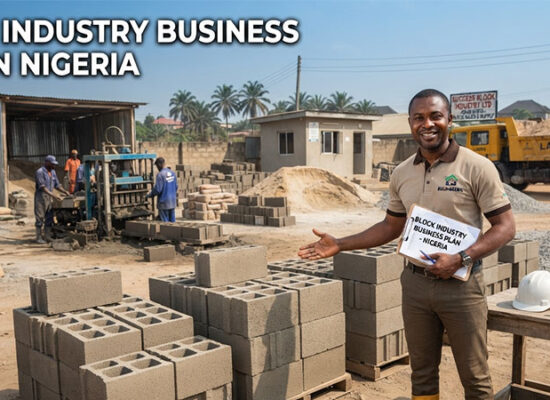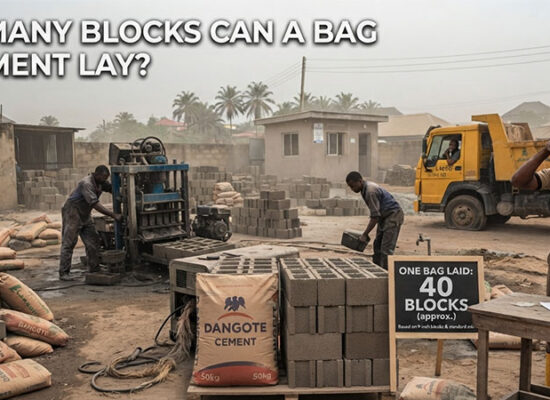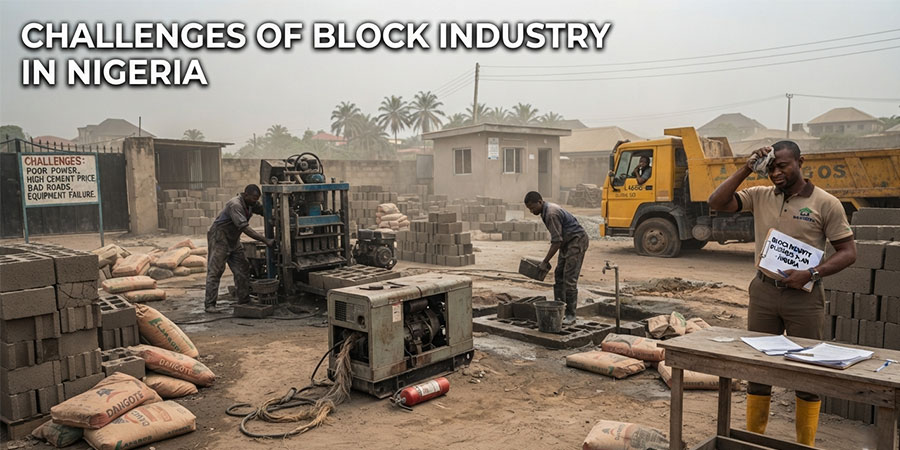
The block industry is one of the most important parts of Nigeria’s construction sector. From residential houses and shops to schools, offices, estates, and commercial buildings, concrete and sandcrete blocks remain widely used construction materials across the country.
However, operating a block-making business in Nigeria is becoming increasingly difficult. Rising cement prices, expensive transportation, unreliable electricity, inadequate access to finance, poor-quality raw materials, intense competition, and weak quality control are putting pressure on manufacturers.
Understanding the challenges of block industry is important for both existing block manufacturers and entrepreneurs considering entering the business. It also matters to builders, developers, contractors, and property owners because the quality and consistency of blocks can directly affect construction costs, structural performance, and project timelines.
Nigeria’s housing demand provides a major market opportunity. The Centre for Affordable Housing Finance Africa reports that the country’s housing deficit had reached approximately 28 million units in 2023. At the same time, construction material costs have increased significantly, making affordable and reliable building materials more important than ever.
This article examines the major challenges facing the Nigerian block industry, explains why they occur, and highlights practical ways manufacturers can build more sustainable and profitable businesses.
What Is the Block Industry?
The block industry refers to businesses involved in manufacturing and selling concrete or sandcrete blocks used for building construction.
A typical block production process involves:
- Selecting suitable sand and aggregates.
- Measuring cement and other materials.
- Mixing the materials with an appropriate quantity of water.
- Moulding the mixture into blocks.
- Removing the blocks from the mould.
- Curing the blocks properly.
- Storing and transporting finished blocks to customers.
Although the process appears straightforward, producing strong and consistent blocks requires proper material selection, accurate mix proportions, suitable equipment, adequate curing, trained workers, and quality control.
The Standards Organisation of Nigeria (SON) explains that Nigerian standards are intended to ensure that products are fit for their intended purpose and meet established requirements.
Major Challenges of Block Industry in Nigeria
1. Rising Cost of Cement
One of the biggest challenges of block industry in Nigeria is the increasing cost of cement.
Cement is a major input in sandcrete block production. When its price increases, manufacturers have to choose between increasing block prices, reducing their profit margins, or attempting to reduce production costs.
The problem becomes more complicated when other inputs such as sand, water, diesel, spare parts, labour, and transportation also become more expensive.
Research and housing-market data have documented substantial increases in Nigerian construction material costs. The Centre for Affordable Housing Finance Africa reports that the price of a 50 kg bag of cement increased substantially between 2019 and 2024, while granite prices also rose sharply.
For block manufacturers, this creates a difficult pricing environment. Customers want affordable blocks, while producers must cover significantly higher operating expenses.
2. Unreliable Electricity Supply
Electricity is another significant challenge facing block manufacturers.
Modern block-making machines may require electricity to operate mixers, vibrating machines, conveyors, pumps, and other equipment. When electricity supply is unreliable, production can slow down or stop completely.
Many businesses therefore rely on generators. However, generator operation adds fuel, maintenance, oil, and repair expenses to the cost of every batch of blocks.
Nigeria’s electricity system has continued to face challenges involving generation, transmission, distribution, infrastructure, and reliability. Reuters reported that businesses and households have frequently relied on generators because of weaknesses in the national power system.
For a block factory operating on tight margins, frequent power interruptions can significantly increase production costs.
3. Poor Quality of Sand and Other Raw Materials
The quality of raw materials has a direct effect on the strength and durability of blocks.
Sand that contains excessive silt, clay, organic matter, or unsuitable particles can affect the performance of finished blocks. Manufacturers who purchase materials based solely on price may unintentionally compromise product quality.
A 2024 Nigerian study examining the effect of sand quality on sandcrete blocks found that some tested blocks failed to meet recommended compressive-strength requirements. The research highlighted the importance of appropriate sand selection and production practices.
This means block manufacturers need to evaluate their sand sources rather than assuming that every locally available sand is suitable for structural block production.
4. Poor Mix Ratios
Another major problem in the Nigerian block industry is inaccurate mixing.
The quantity of cement, sand, water, and other materials needs to be controlled carefully. Some manufacturers use improvised measurements instead of standardized batching methods.
For example, changing the cement-to-sand ratio simply to reduce production costs can result in weaker blocks.
Research on commercially produced sandcrete blocks in Nigeria has found cases where measured compressive strengths were substantially below the minimum values associated with Nigerian standards.
Reducing cement usage may appear profitable in the short term, but weak blocks can damage a manufacturer’s reputation and expose customers to construction problems.
5. Inadequate Curing
Proper curing is essential for developing the strength of cement-based products.
After moulding, blocks need appropriate curing conditions so that cement hydration can continue and the blocks can develop adequate strength.
Poor curing may occur when manufacturers rush blocks to market, fail to provide sufficient water, or do not allocate enough space for proper curing.
This is particularly problematic during periods of intense demand. A manufacturer may feel pressure to sell blocks shortly after production instead of allowing sufficient curing time.
A quality-focused block manufacturer should therefore treat curing as an essential production stage rather than an optional activity.
6. Lack of Quality Control and Testing
Quality control remains one of the most important challenges of block industry in Nigeria.
Some small-scale manufacturers do not regularly test their products for compressive strength, density, water absorption, dimensional consistency, or other relevant characteristics.
Without testing, it becomes difficult to determine whether production changes have improved or weakened the product.
SON’s role includes standardization and quality assurance, with Nigerian standards designed to provide consistent requirements for products and production processes.
Block manufacturers should therefore establish basic quality-control procedures and, where appropriate, use competent laboratories or technical professionals for testing.
7. Intense Competition
The relatively low barriers to entry into small-scale block manufacturing have created significant competition.
In many Nigerian communities, several block factories operate within the same area. Some compete primarily by reducing their selling prices.
Price competition can become harmful when businesses attempt to undercut competitors by reducing cement content, using cheaper materials, or compromising other production processes.
Instead of competing solely on price, manufacturers can differentiate themselves through:
- Consistent block dimensions
- Reliable strength
- Proper curing
- Accurate delivery
- Professional customer service
- Transparent pricing
- Bulk-order discounts
- Good reputation
A manufacturer that develops a reputation for dependable quality can compete more effectively than one that simply offers the cheapest blocks.
8. High Transportation Costs
Transportation is another major operating expense.
Block factories need to transport sand, cement, aggregates, water, machinery, spare parts, and finished blocks. Since blocks are relatively heavy and bulky, transportation costs can have a substantial effect on the final selling price.
Poor road conditions can increase vehicle maintenance expenses and delivery times. Rising fuel costs can also make long-distance delivery less profitable.
This is one reason location is extremely important when establishing a block factory. A suitable location should ideally provide reasonable access to raw materials and be close enough to major construction markets.
9. Limited Access to Finance
Many small and medium-sized block manufacturers struggle to obtain affordable financing.
A block business may require significant capital for:
- Block-making machines
- Mixers
- Moulds
- Generators
- Water systems
- Land
- Raw materials
- Trucks
- Maintenance
- Labour
- Working capital
High borrowing costs can make expansion difficult, especially for small businesses without substantial collateral or formal financial records.
Better bookkeeping, proper registration, transparent financial statements, and a documented business plan can improve a company’s ability to demonstrate its creditworthiness.
10. Equipment Breakdown and Maintenance Problems
Block-making equipment operates under demanding conditions. Cement, sand, dust, water, and vibration can cause wear on machines.
When equipment breaks down unexpectedly, production stops. The manufacturer may also have to pay for replacement parts, mechanics, transportation, and lost working hours.
Preventive maintenance is therefore critical.
Rather than waiting for a machine to fail, manufacturers should create maintenance schedules covering lubrication, belts, bearings, moulds, electrical components, mixers, vibrating systems, and other critical parts.
Keeping frequently needed spare parts available can also reduce downtime.
11. Shortage of Skilled Workers
The quality of a block depends not only on the machine but also on the people operating it.
Workers need to understand batching, mixing, moulding, curing, equipment operation, and basic quality-control procedures.
Poorly trained workers may use inconsistent quantities of materials or mishandle machinery.
Investing in worker training can improve productivity, reduce material waste, increase safety, and produce more consistent blocks.
12. Weak Industry Regulation and Enforcement
Standards exist for construction materials, but effective implementation and enforcement remain important challenges.
SON identifies standardization and quality assurance as core parts of its mandate.
However, where manufacturers operate without adequate monitoring or testing, poor-quality products can remain in circulation.
Industry stakeholders can help address this problem by encouraging greater compliance, better testing, professional supervision, and stronger consumer awareness.
13. Customer Pressure for Cheap Blocks
Many customers naturally want to reduce construction costs. However, an excessive focus on price can encourage poor production practices.
A customer who compares two blocks only by their selling price may overlook differences in cement content, dimensions, curing, strength, and quality control.
Builders and property owners should therefore evaluate block suppliers based on value rather than price alone.
A slightly cheaper block is not necessarily cheaper if it contributes to excessive breakage, material waste, structural problems, or construction delays.
How Can the Nigerian Block Industry Overcome These Challenges?
Adopt Standardized Production Methods
Manufacturers should use consistent batching procedures rather than relying on guesswork.
Materials should be measured accurately, and production records should be maintained for each batch.
Test Blocks Regularly
Periodic compressive-strength testing can help manufacturers identify quality problems before they reach customers.
Testing also provides evidence that a business takes product quality seriously.
Improve Curing Practices
Manufacturers should provide suitable curing conditions and avoid rushing freshly produced blocks to customers.
Proper curing can improve product performance and reduce unnecessary breakage.
Invest in Efficient Machinery
Modern equipment can improve consistency and productivity. However, manufacturers should select machinery based on production volume, available power, maintenance requirements, and spare-part availability.
Reduce Energy Costs
Businesses can investigate energy-efficient machines, improved generators, solar solutions, or other suitable alternatives depending on their location and production scale.
Build Strong Supplier Relationships
Reliable suppliers can help manufacturers maintain consistent access to cement, sand, aggregates, spare parts, and other essential materials.
Long-term relationships may also make it easier to negotiate better supply arrangements.
Focus on Quality Instead of Price Alone
The long-term success of a block company depends heavily on reputation.
Producing consistently strong blocks and providing reliable service can create repeat customers among builders, contractors, developers, and individuals constructing homes.
Why the Block Industry Still Has Strong Potential in Nigeria
Despite these challenges, the Nigerian block industry has significant opportunities.
Nigeria continues to experience strong demand for housing and infrastructure. CAHF reports a housing deficit of approximately 28 million units, while annual housing supply remains far below estimated demand.
The country’s construction sector also remains economically significant. According to the National Bureau of Statistics, construction accounted for 4.85% of Nigeria’s real GDP in the first quarter of 2026.
These figures demonstrate that the market for construction materials is unlikely to disappear. Instead, the industry is likely to reward manufacturers that can provide reliable products at competitive prices.
There are also opportunities to use technology to improve production monitoring, inventory management, customer acquisition, delivery scheduling, and quality control.
Digital marketing can help block manufacturers reach contractors and property developers directly instead of depending entirely on walk-in customers.
What Customers Should Look for When Buying Blocks
Buyers should not choose blocks based solely on price.
Before purchasing, consider:
- The reputation of the manufacturer
- Consistency of block dimensions
- Visible cracks or excessive breakage
- Appropriate curing
- Quality of the raw materials
- Intended use of the blocks
- Evidence of quality testing where necessary
- Delivery reliability
- Professional advice from qualified construction professionals
For major structural projects, buyers should follow the specifications provided by the project’s qualified engineer or other appropriate professional.
Conclusion
The challenges of block industry in Nigeria are significant, but they are not impossible to overcome.
Rising cement and fuel costs, unreliable electricity, expensive transportation, poor-quality raw materials, inadequate curing, inconsistent mix ratios, limited financing, equipment breakdowns, skilled-labour shortages, intense competition, and quality-control problems all affect the profitability and sustainability of block manufacturing.
However, the industry continues to have strong potential because Nigeria has substantial demand for housing and infrastructure. The businesses most likely to succeed will be those that combine efficient production with consistent quality, proper testing, good customer service, effective cost management, and strong business practices.
For buyers, the lesson is equally important: quality blocks are an investment in the durability and safety of a building.
If you are looking for reliable building materials, explore quality block options and connect with suppliers through blockindustry.com.ng.
Ready to buy quality blocks for your next construction project? Visit BlockIndustry.com.ng to find suitable block products and suppliers for your building needs.